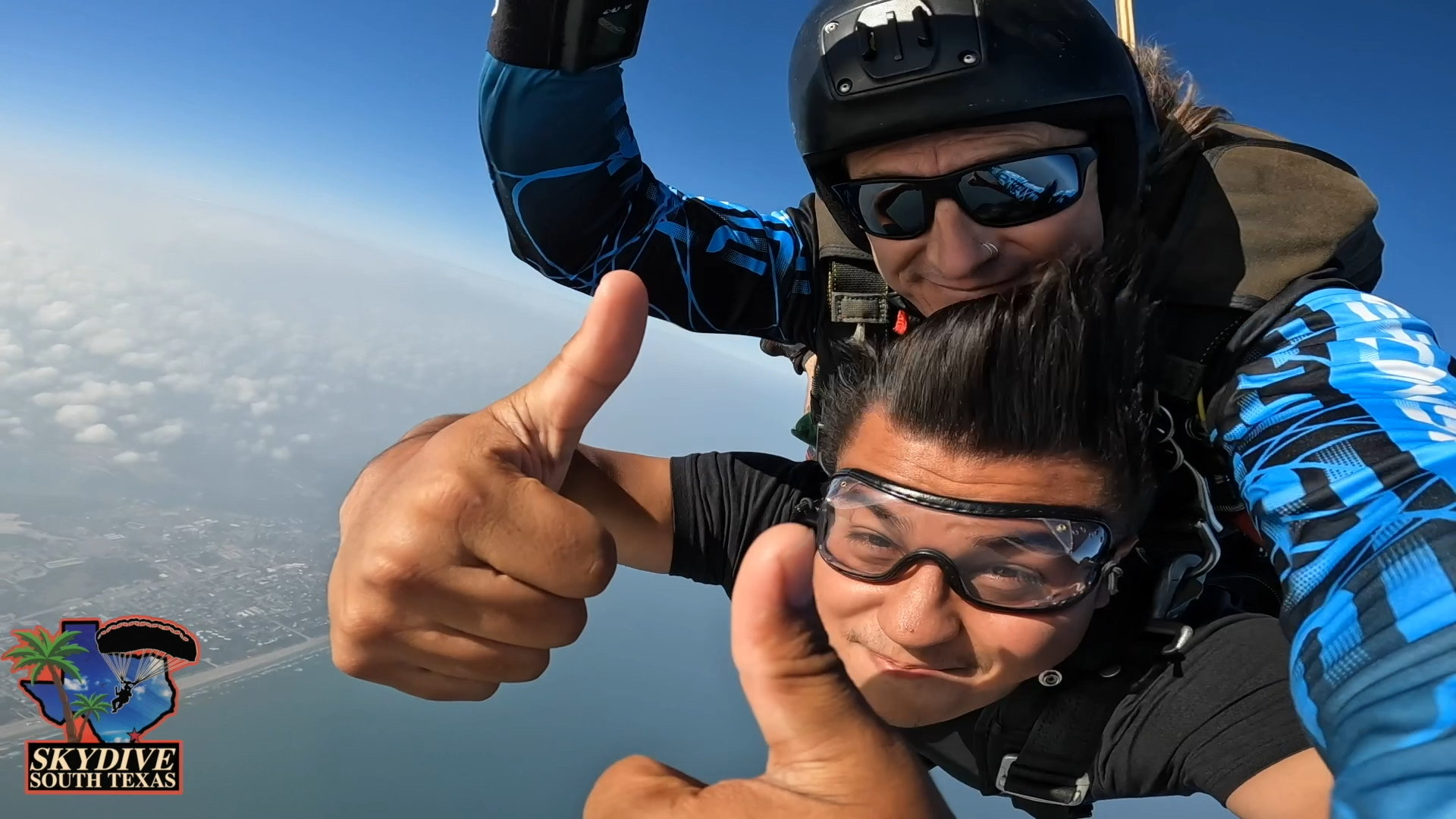
Your First Tandem Skydive on the Texas Coast
Most people remember their first skydive in pieces — the moment in the door, the second the parachute opens and everything goes quiet, the sight of the coastline sliding past underneath them.
This post is a walk-through of that day, so you know what's coming — and so you can show up ready to soak it in.
Your day at a glance
- Check-in & training: 30–45 minutes
- Plane ride to altitude: about 20 minutes
- Freefall: from over two miles up
- Canopy ride: 5–7 minutes
- Landing: back on solid ground, grinning
Before you arrive
Book your slot online, and you'll get a confirmation email with directions, what to wear, and a link to the waiver. Three things that make the day go better:
- Eat something. Have breakfast. It helps with the nerves and keeps you steady at altitude.
- Wear what you'd wear to the beach plus closed-toe shoes. Athletic gear works. Sneakers, not flip-flops — we'll put a jumpsuit over the top.
- Bring a friend if you can. Watching someone else land first is genuinely calming, and you'll want a person to celebrate with on the ground.
Check-in and training
When you walk in, we'll know your name. The owner is usually around, and the people checking you in are the same people you'll be flying with. You'll finish the waiver, weigh in, and pay any remaining balance.
Then you'll go through a short training session — not a class so much as a quick walk-through: how to position your body in the door, how to arch on exit, what to do with your legs on landing. Your tandem instructor, who is physically attached to you for the entire jump, runs through it with you and answers anything you ask.
This is also when you'll meet the videographer, if you booked a video and photo package.
Gearing up and the plane ride
We fly Cessna 182s — small, single-engine planes. The load is just you, your instructor, the pilot, and maybe one other jumper, so the ride is intimate enough that you can actually talk and ask last-minute questions.
The climb to altitude takes about twenty minutes. You'll see the bay on one side, the Gulf on the other, the long ribbon of Padre Island, and the patchwork of South Texas in every other direction. At altitude, your instructor will tap your shoulder. It's time.
The exit and freefall
Your instructor will scoot you both toward the open door. You'll feel the wind, see the ground a long way down, then lean out, arch your back, and be falling.
The first three seconds are the only part that feels like a roller coaster. After that, the air pressure builds up underneath you, your body finds the arch, and freefall stops feeling like falling and starts feeling like floating. People expect terror; what they get is closer to wide-eyed amazement.
You'll freefall from over two miles up, and then your instructor will deploy the parachute. Almost everyone says the same thing afterward: it felt like much longer, and they remember it like a movie.
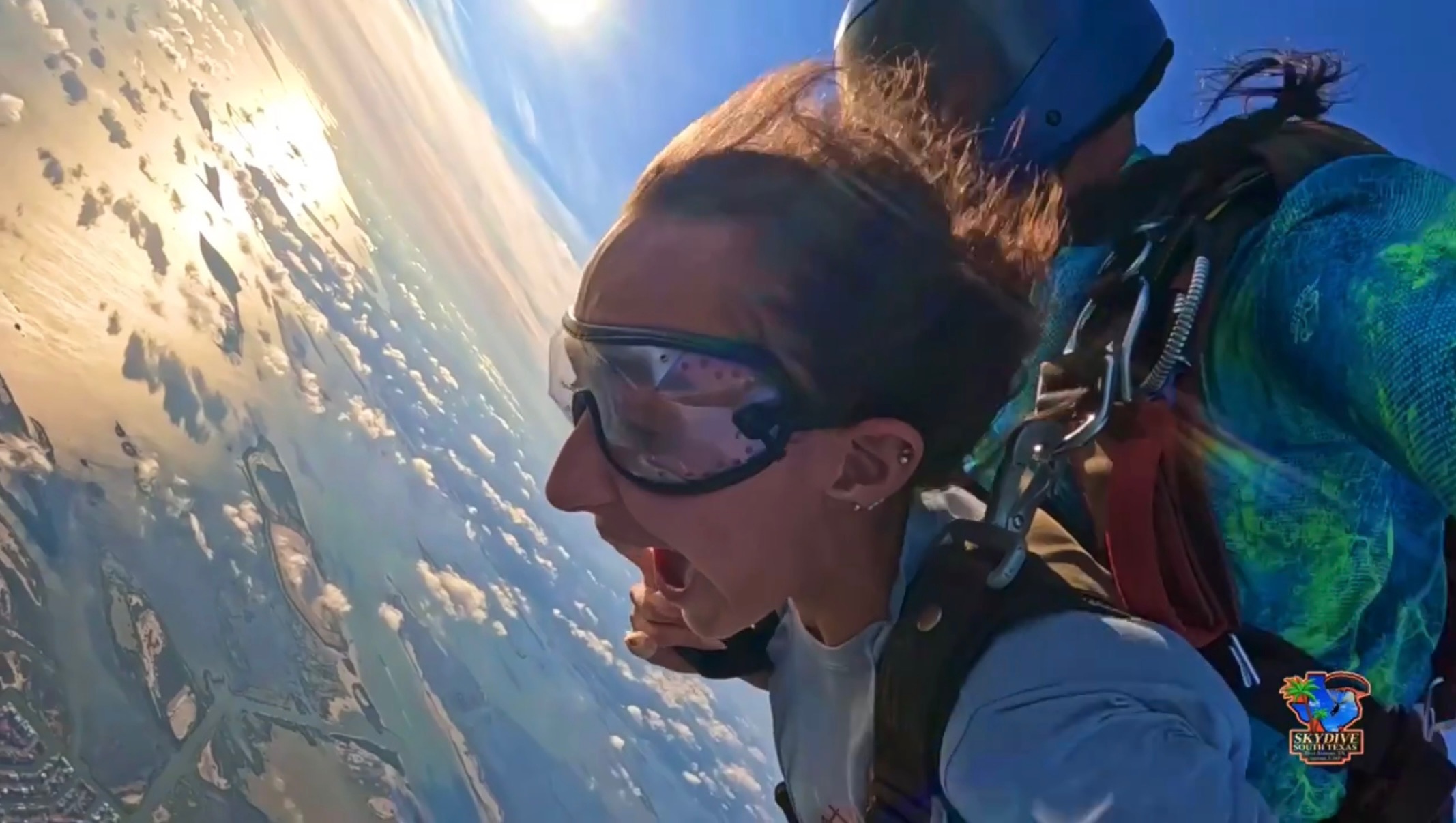
Under canopy — the part nobody tells you about
This is the part most first-timers don't expect to love as much as they do. The parachute opens, the noise stops, and suddenly it's quiet — just you and your instructor having a normal conversation while a coastline slides by underneath your feet.
You can see the beaches of Mustang Island and Padre, the Laguna Madre, the bay, and on a clear day a long stretch of the Gulf. The freefall is the rush; the canopy ride is the part you'll close your eyes and replay later.
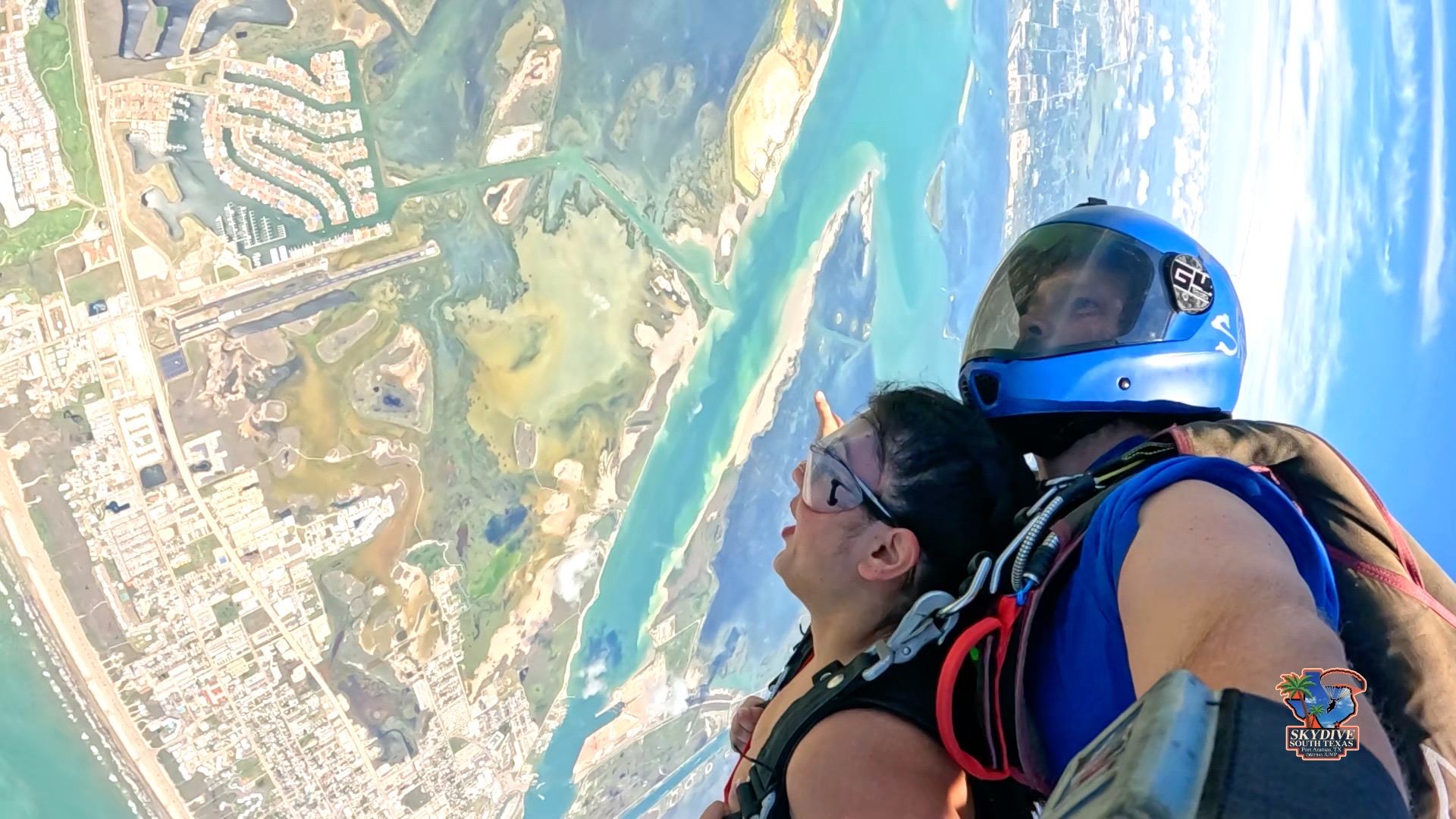
Want the canopy ride to end with your feet on the sand? That's our beach landing — on select days you come down right on Mustang Island.
Landing
About five to seven minutes after the parachute opens, you'll come in over the field. Your instructor will tell you to lift your legs straight out in front of you, and you'll slide in on your feet or your butt depending on the wind. Either way, you'll be on the ground, smiling, with shaky knees, already trying to put words to what just happened.
The video and photo package
Here's the honest truth about a first skydive: you will not remember as much as you think you will. The whole thing happens fast, and parts of it blur the moment your feet touch the ground.
That's why we strongly recommend the video and photo package. Your jump gets captured from start to finish — your face in the door, the freefall, the canopy ride, the landing. We also auto-create short, social-ready video reels from your jump, usually before you've even left the drop zone.
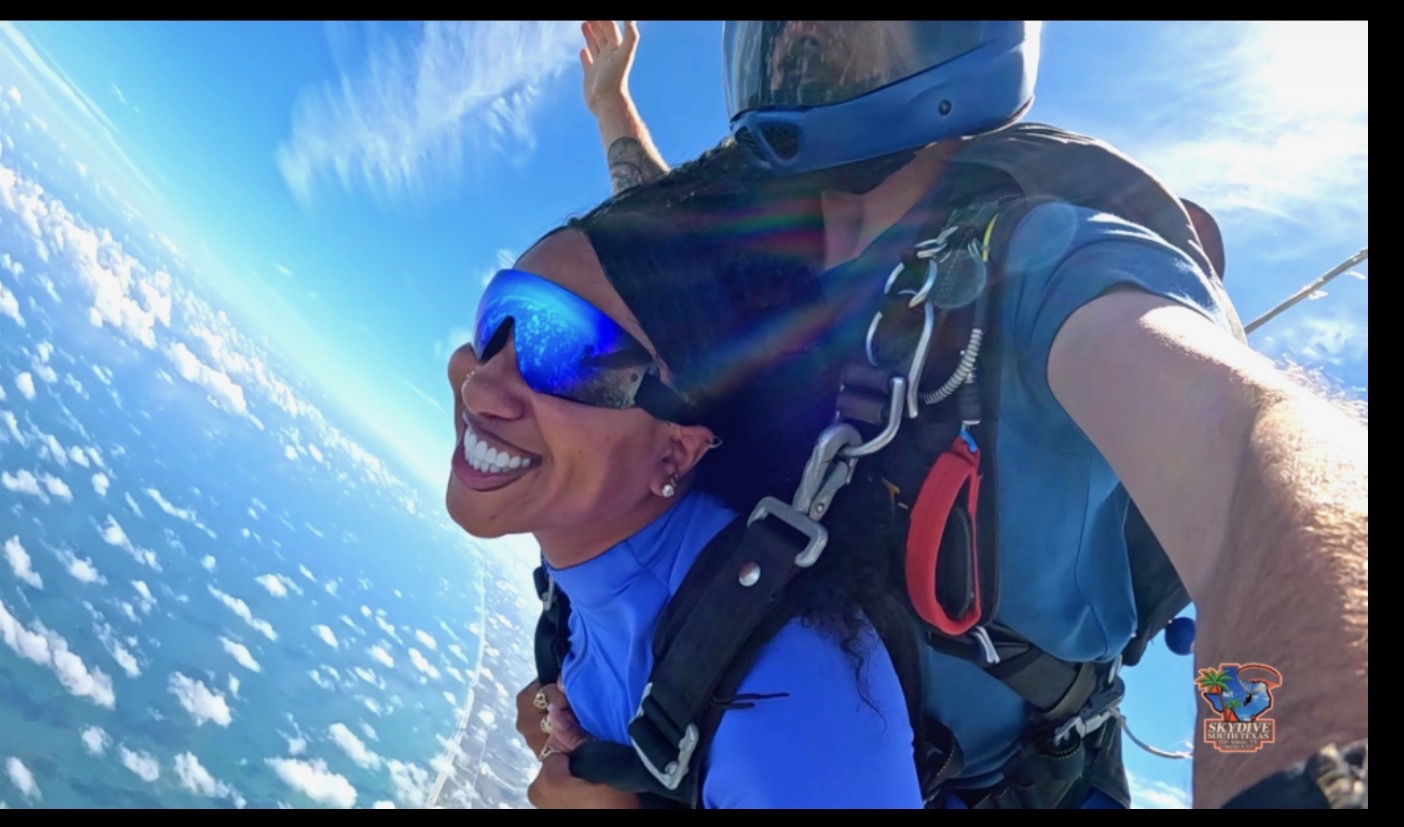
What makes a jump here its own thing
- The setting. Beach views under canopy, the Laguna Madre and the Gulf on either side, and a small grass field surrounded by the scenery you came to South Texas for in the first place.
- The size. A tight crew and a small manifest. The instructor walking you through training is the same person you'll be in the air with.
- The personal part. First-time tandems get the same attention as the licensed regulars.
- The take-home. The video, the photos, the auto-generated reel — so what you experienced doesn't only live in your head.
If you're flying into Corpus Christi, road-tripping to South Padre, or already at the beach for the weekend, we're a short drive away.
A few quick questions
Keep exploring
- Is a Gulf Coast skydive worth the drive?
- What “Beach Landing” really means
- Make a weekend of it: Port Aransas + a Gulf Coast skydive
- What does a Texas skydive actually cost?
- Things to do in Port Aransas beyond the jump
- Group events & celebrations
Ready when you are
This is the kind of day people talk about for years. Book yours now — or call us with questions first. We'd rather you ask now than wonder on the way to the drop zone.